
Introduction to chilli
Chilli, also known as Capsicum annuum, is a widely cultivated plant that belongs to the Solanaceae family. It is grown for its edible fruits, which are consumed either fresh or dried and are used for culinary, medicinal, and industrial purposes. Commonly referred to as chilli peppers, they are an essential ingredient in cuisines worldwide due to their pungency and flavor.
Chilli cultivation spans many countries, with significant production across Asia, Africa, and the Americas. Globally, India stands as the largest producer, contributing around 25–30% of the total production, followed by China, Mexico, and Indonesia. In India, production is spread across Andhra Pradesh, Telangana, Karnataka, Tamil Nadu, and Odisha — with Andhra Pradesh leading the country and accounting for nearly 40% of the national yield.
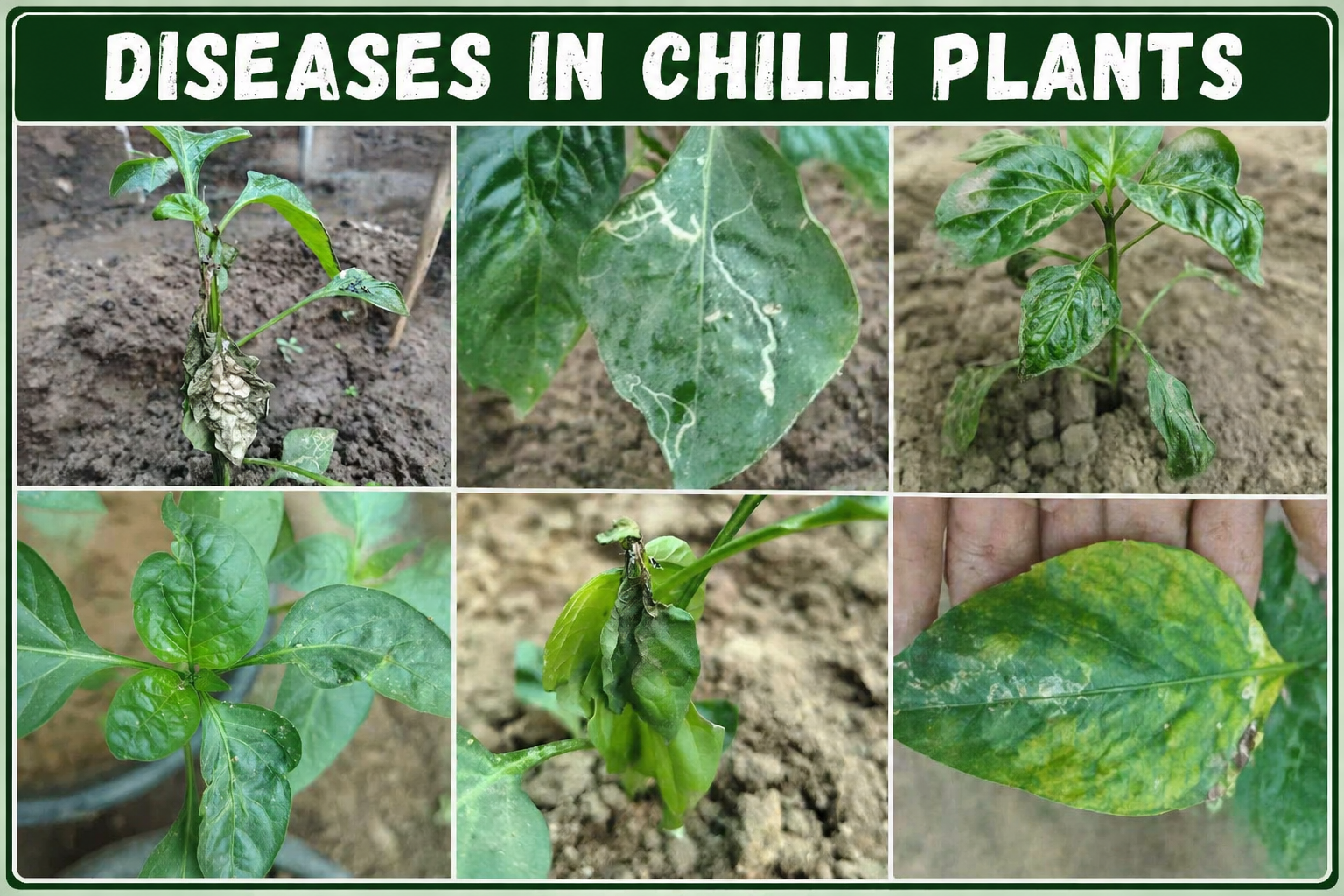
Classification of chilli diseases
Chilli pathogens fall into three broad groups based on the causal agent. Knowing which group you are dealing with shapes everything downstream — sanitation, vector control, resistant variety choice, and biocontrol selection.
Fungal and oomycete diseases
- Damping-off (Pythium spp., Rhizoctonia solani, Phytophthora spp.)
- Phytophthora blight (Phytophthora capsici)
- Anthracnose / fruit rot (Colletotrichum spp.)
- Powdery mildew (Leveillula taurica)
Bacterial diseases
- Bacterial wilt (Ralstonia solanacearum)
Viral diseases
- Chilli leaf curl disease (begomoviruses, vectored by Bemisia tabaci)
- Mosaic virus complex — CMV, TMV, PMMoV
Damping-off
Damping-off is a destructive disease affecting chilli plants at the seedling stage, caused by soil-borne pathogens such as Pythium spp., Rhizoctonia solani, and Phytophthora spp. It results in the rotting of seeds before emergence or the collapse of young seedlings after emergence. A characteristic symptom is the constriction and weakening of the stem at the soil line, leading to seedling death. This disease is highly severe in nurseries and can wipe out entire batches of seedlings under favorable conditions. Yield losses can range from 20% to as high as 85%.
What to look for
- Failure of seeds to emerge from the seedbed
- Water-soaked, pinched stems at the soil line
- Sudden toppling of seedlings in patches within the nursery
- Cottony fungal growth on collapsed seedlings under high humidity
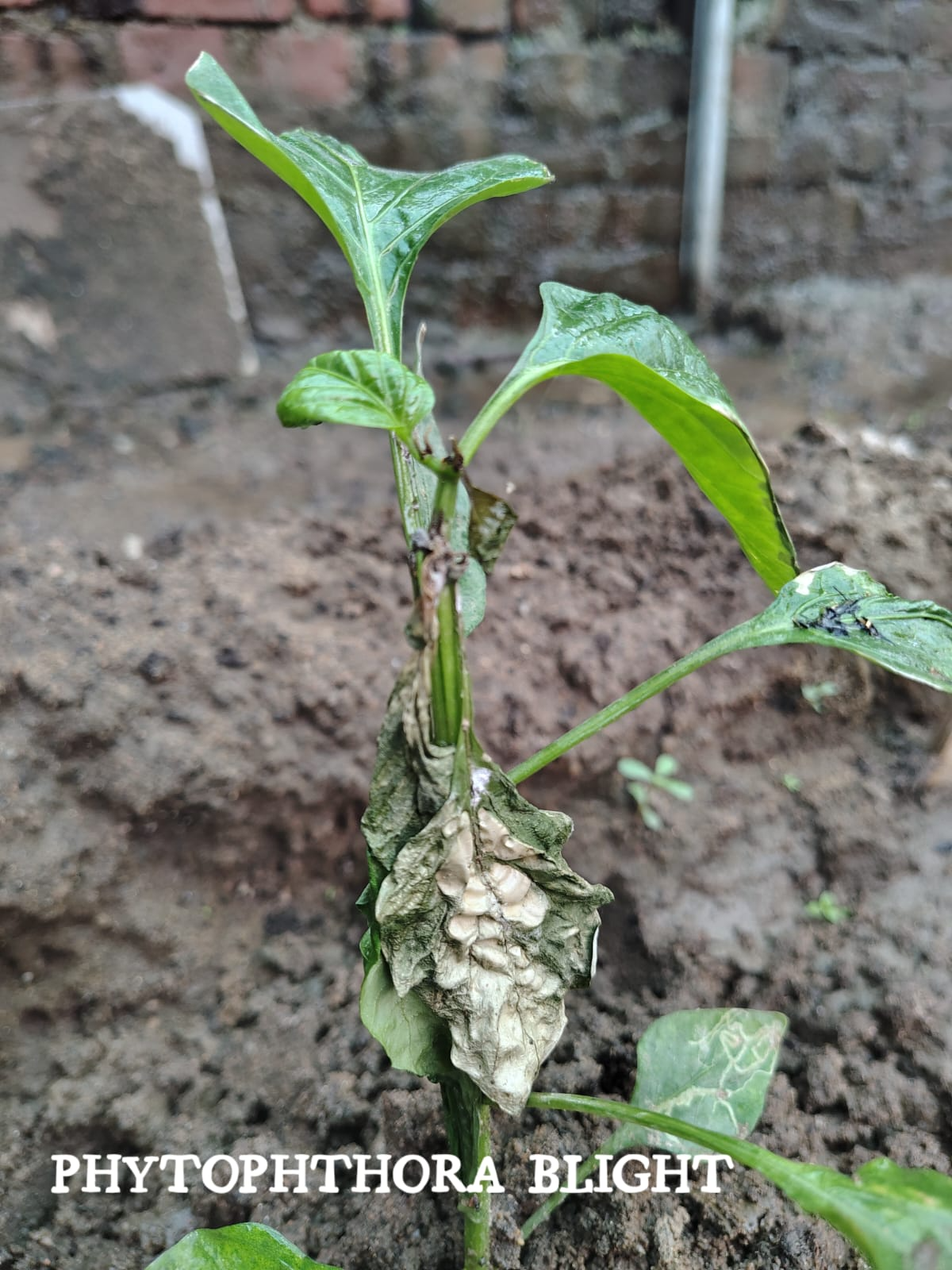
Phytophthora blight
Phytophthora blight, caused by Phytophthora capsici, is a highly destructive disease affecting multiple parts of the plant, including roots, stems, and fruits. Infected plants show sudden wilting, followed by rotting of tissues and development of water-soaked lesions. The disease spreads rapidly, especially under high moisture conditions, often leading to complete plant death. Due to its aggressive nature, it can cause yield losses ranging from 30% to 100%.
Mode of action
Phytophthora capsici produces motile zoospores that swim through soil water films to infect roots and lower stems. Once inside, it kills tissue ahead of itself, causing the rapid wilt that distinguishes blight from slower vascular diseases.
Bacterial wilt
Bacterial wilt, caused by Ralstonia solanacearum, is a serious vascular disease characterized by sudden wilting of plants without prior yellowing of leaves. A key diagnostic feature is the presence of milky bacterial ooze from the cut stem. The pathogen blocks the water-conducting tissues, leading to rapid plant collapse. This disease is particularly devastating in warm and humid conditions and can result in yield losses between 50% and 100%.
Field diagnostic
Cut a wilted stem near the base and suspend it in a glass of clean water. If a milky white "smoke" of bacteria streams out within a few minutes, the diagnosis is bacterial wilt — not a fungal or oomycete pathogen.
Anthracnose (fruit rot)
Anthracnose, caused by Colletotrichum spp., primarily affects the fruits of chilli plants, leading to significant pre- and post-harvest losses. Symptoms include the appearance of sunken lesions with concentric rings on fruits, which eventually lead to rotting. The disease reduces both the marketability and quality of produce. Under favorable environmental conditions, yield losses can vary from 20% to 70%.
Powdery mildew
Powdery mildew, caused by Leveillula taurica, is a foliar disease that appears as white powdery growth on the surface of leaves. Infected leaves gradually turn yellow, dry, and fall off prematurely. This reduces the photosynthetic capacity of the plant, leading to weakened growth and reduced yield. The disease can cause yield losses ranging from 20% to 40%, especially under dry and moderate temperature conditions.
Viral diseases — the most dangerous group
Viruses cannot be cured once a plant is infected. Management is preventative and revolves around two levers: clean planting material and aggressive vector control — primarily against the whitefly Bemisia tabaci.
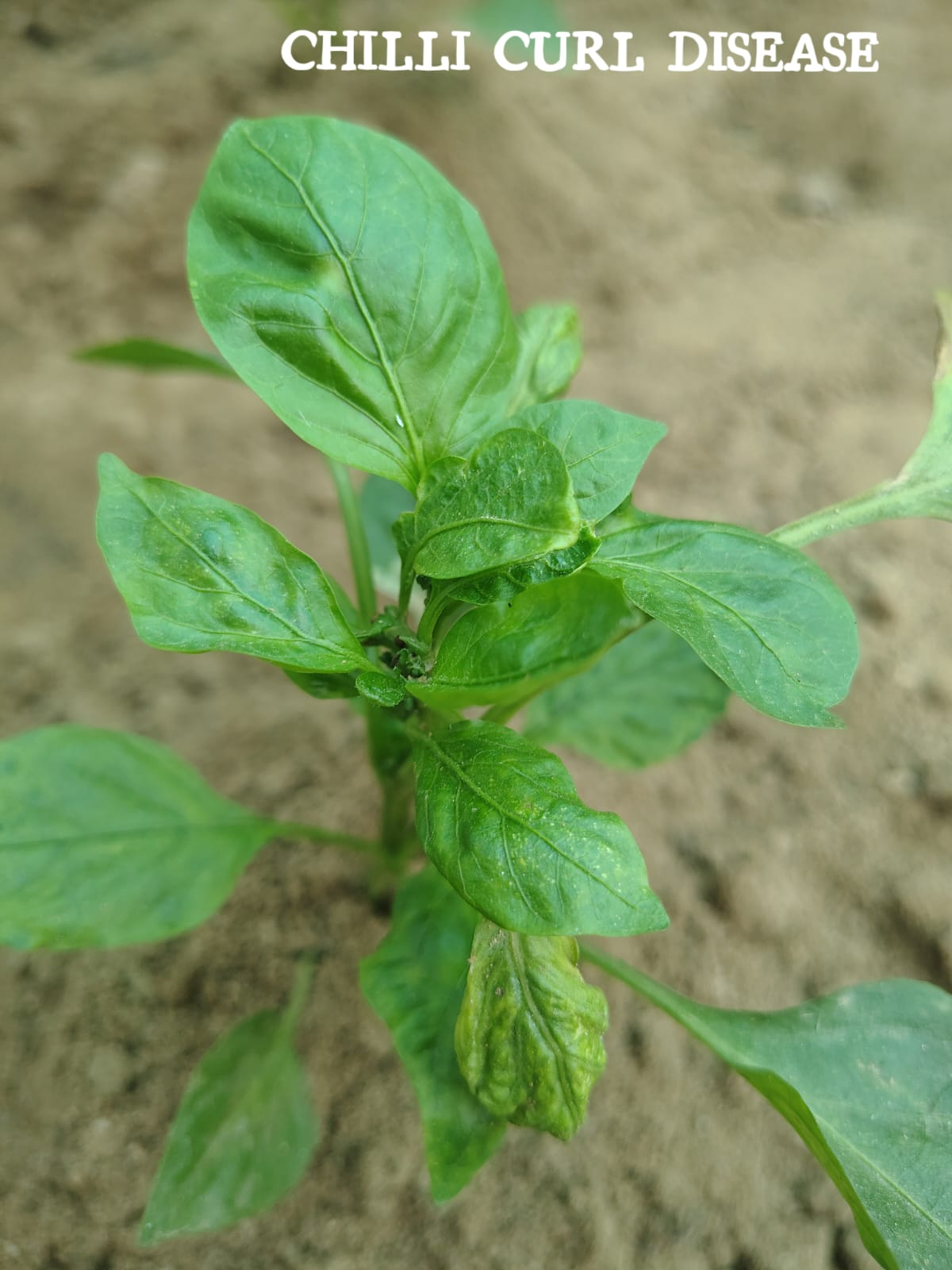
Chilli leaf curl disease
Leaf curl disease in chilli is caused by begomoviruses such as Chilli leaf curl virus and is transmitted by the whitefly (Bemisia tabaci). Infected plants exhibit severe leaf curling, puckering, and distortion, along with pronounced stunting. The disease significantly hampers plant growth and fruit development. It is one of the most severe viral diseases and can lead to up to 100% yield loss in heavily infected fields.
Mosaic virus disease
Mosaic diseases in chilli are caused by viruses such as CMV (Cucumber mosaic virus), TMV (Tobacco mosaic virus), and PMMoV (Pepper mild mottle virus). These viruses induce characteristic mosaic patterns of alternating yellow and green patches on leaves, along with leaf distortion. Infected plants show reduced vigor and produce poor-quality fruits. Depending on severity, yield losses can range from 20% to 100%.
Disease treatment and biocontrol
Sustainable chilli cultivation increasingly relies on biological control rather than blanket chemical sprays. Beneficial microbes — endophytes and rhizosphere bacteria — can suppress pathogens while improving plant vigor.
Cultural and sanitary practices
- Use certified, disease-free seed and seedlings
- Rotate chilli with non-solanaceous crops to break soil-borne disease cycles
- Raise nurseries on well-drained beds; avoid overwatering and waterlogging
- Rogue and destroy symptomatic plants — especially virus-infected ones — to remove inoculum
- Manage whitefly populations with yellow sticky traps and physical barriers (insect-proof nets in nurseries)
Biocontrol agents
- Trichoderma spp. — seed and soil treatment to suppress damping-off and Phytophthora
- Bacillus subtilis and Bacillus velezensis — root-zone colonisers that prime plant defences
- Pseudomonas fluorescens — induces systemic resistance against bacterial wilt
- Beauveria bassiana / Lecanicillium spp. — entomopathogens targeting whitefly to break the leaf-curl transmission cycle
Quick yield-loss reference
- Damping-off: 20–85%
- Phytophthora blight: 30–100%
- Bacterial wilt: 50–100%
- Anthracnose / fruit rot: 20–70%
- Powdery mildew: 20–40%
- Leaf curl disease: up to 100%
- Mosaic virus complex: 20–100%
Conclusion
Chilli is one of the most economically important spice crops in the world, but its yield is uniquely vulnerable to a stack of soil-borne, vascular, and vector-borne diseases. Visual identification gets you to the right diagnosis fast; clean planting material, vector management, and microbial biocontrol keep the crop in the ground long enough to harvest it. Build the season around prevention — not rescue sprays — and the yield-loss numbers above stop being inevitable.
Written by
Kalpana Kumari
Research Assistant
Research Assistant at exRNA Agro, focused on chilli (Capsicum) crop health, disease diagnostics, and biocontrol-led management strategies.