
Introduction to tomato
Tomato (Solanum lycopersicum L.) is a globally important vegetable crop of the Solanaceae family, valued for its wide adaptability, short growth cycle, and high economic returns. It is cultivated across diverse agro-climatic conditions and consumed both fresh and in processed forms — sauces, pastes, juices, and dried products — making it integral to food and processing industries worldwide.
Nutritionally, tomatoes are rich in vitamin C, vitamin A, potassium, and lycopene, a potent antioxidant associated with reduced risk of cardiovascular diseases and certain cancers. The crop holds substantial economic value due to high market demand, multiple harvest potential, and contribution to farmer income as well as the agri-processing sector.
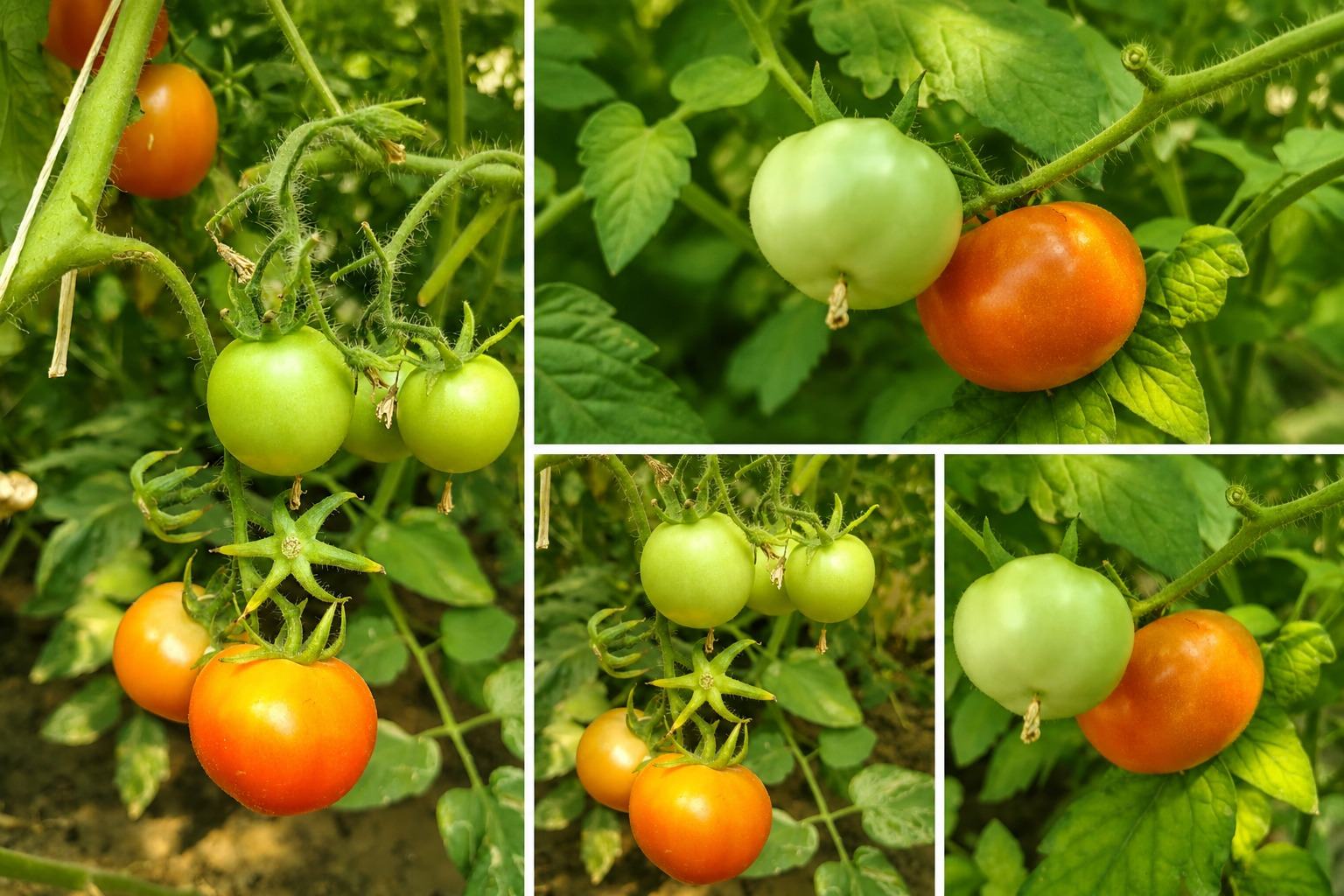
Tomato production is significantly affected by pests, diseases, and post-harvest inefficiencies. Globally, yield losses due to biotic stresses are estimated at around 30–35%, potentially exceeding 70% in the absence of effective management. In India, total losses including post-harvest factors may range from 40% to 80%, primarily due to inadequate crop protection, storage, and supply chain infrastructure.
Symptoms of tomato diseases
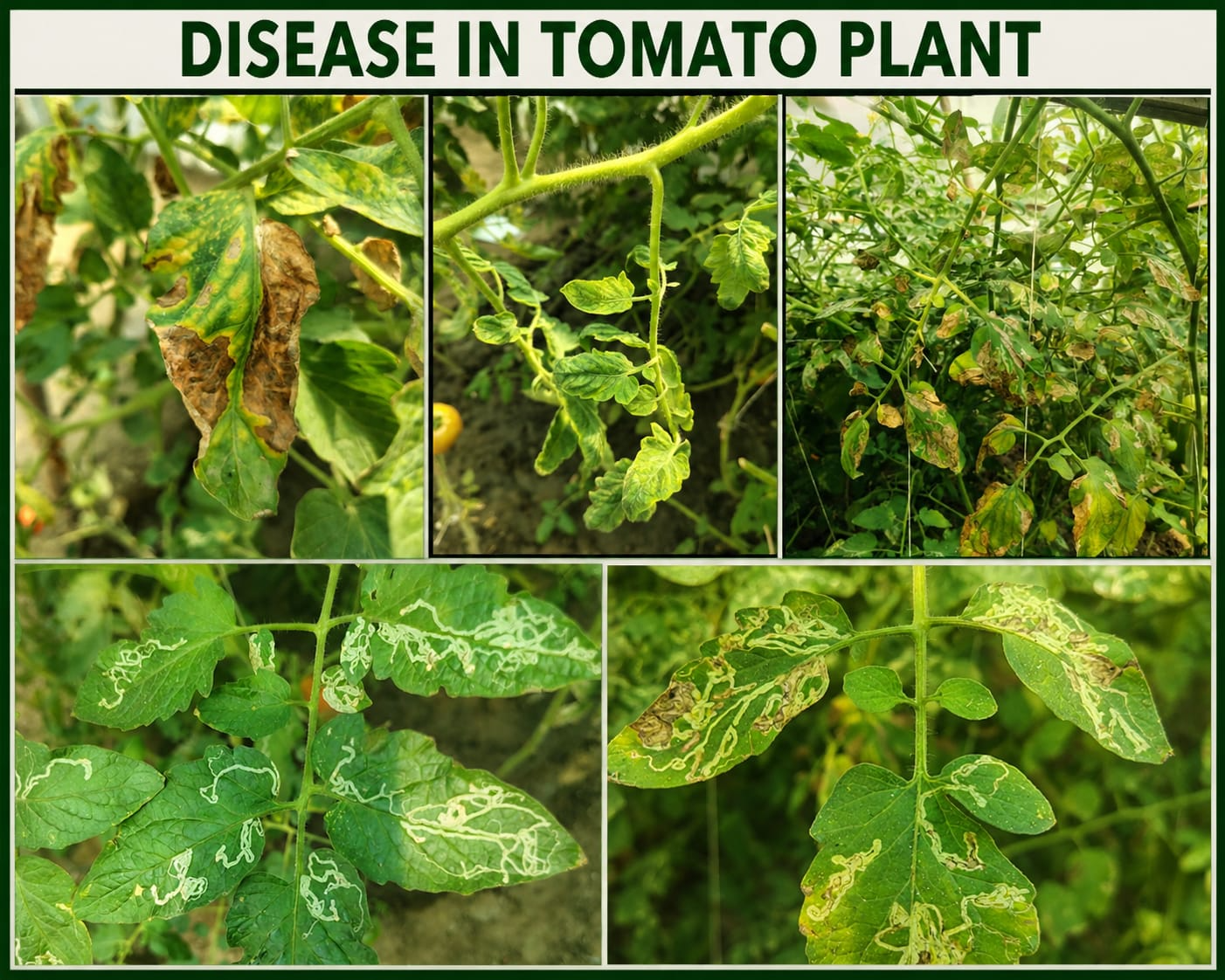
Tomato diseases announce themselves through visible symptoms long before yield is fully lost. Recognising these patterns early is the difference between a manageable infection and a collapsed crop.
- Concentric ring spots and target-like lesions on older leaves — a hallmark of early blight
- Water-soaked, greasy lesions that spread rapidly across leaves and fruits — typical of late blight
- White, powdery growth on the upper leaf surface — powdery mildew
- Sudden wilting of green plants without prior yellowing — bacterial wilt
- Upward leaf curl, chlorosis, and stunted growth — TYLCV (whitefly-transmitted)
- Mosaic patterns of light and dark green, leaf distortion, and shoestring leaves — CMV
- Bronze or purplish spots on leaves and ring spots on fruits — TSWV (thrips-transmitted)
Classification of tomato diseases
Tomato pathogens fall into three broad groups based on the causal agent. Identifying which group is in play determines whether the response is sanitation, vector control, resistant variety choice, or biological agents.
Fungal and oomycete diseases
- Early blight (Alternaria solani)
- Late blight (Phytophthora infestans)
- Powdery mildew (Erysiphe orontii, Oidium spp.)
Bacterial diseases
- Bacterial wilt (Ralstonia solanacearum)
Viral diseases
- Tomato Spotted Wilt Virus (TSWV) — thrips-transmitted
- Tomato Yellow Leaf Curl Virus (TYLCV) — whitefly-transmitted
- Cucumber Mosaic Virus (CMV) — aphid-transmitted
Early blight
Early blight of tomato is caused by the fungus Alternaria solani. The disease is characterised by small, dark brown to black lesions with concentric rings, giving the typical “target spot” appearance — primarily on older leaves. The infection usually begins on lower foliage and progresses upward, leading to leaf yellowing, defoliation, and sometimes fruit infection.
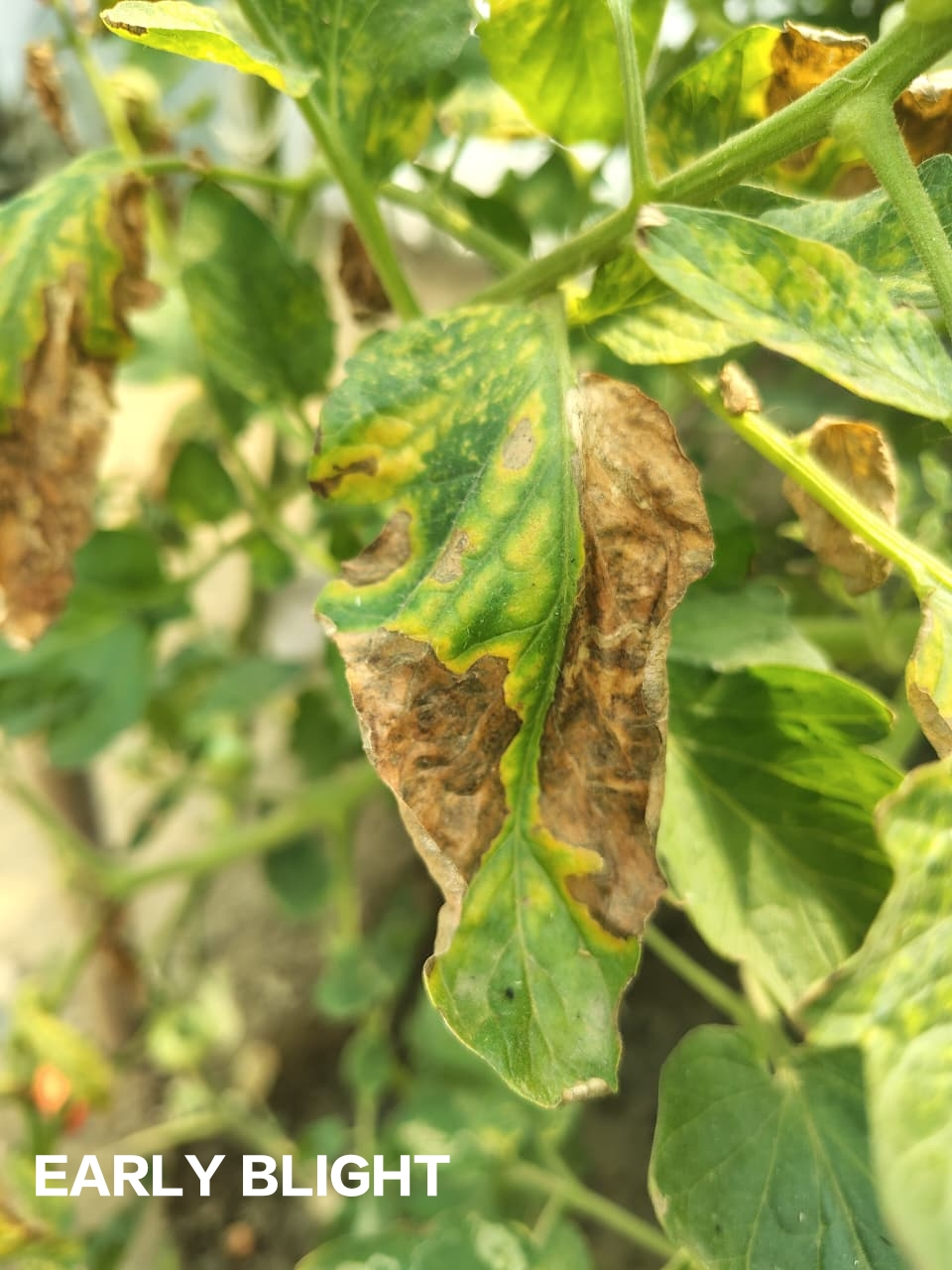
Yield losses in India range from approximately 32–48%, while global losses vary widely between 20–79% depending on environmental conditions and disease severity. Wet, warm weather and dense canopies accelerate the disease, and once defoliation reaches the upper third of the plant, fruit fill and sun-scald losses compound quickly.
Late blight
Late blight is caused by Phytophthora infestans, an oomycete pathogen that famously triggered the Irish potato famine and remains the most explosive tomato disease worldwide. It manifests as water-soaked, greasy lesions on leaves, often accompanied by white fungal growth on the underside under humid conditions. The disease can spread rapidly to fruits, causing dark, sunken rot, and may result in sudden and complete plant collapse.
In India, yield losses typically range from 20–80%, while globally severe epidemics can lead to losses of 30–100%, sometimes resulting in total crop failure. Cool nights, warm days, and prolonged leaf wetness are the trigger conditions — once the canopy stays wet for more than 10–12 hours, the pathogen sporulates aggressively.
Powdery mildew
Powdery mildew in tomato is caused by fungi such as Erysiphe orontii and Oidium species. It is identified by white, powdery fungal growth on leaf surfaces, which leads to leaf drying and premature defoliation. This reduces the plant's photosynthetic capacity and overall vigour.
Yield losses are generally lower compared to other diseases — about 10–30% in India and 20–40% globally — particularly in dry climatic conditions with moderate temperatures. The disease is often underestimated because plants do not collapse, but the cumulative loss of photosynthetic area during fruit fill is significant.
Bacterial wilt
Bacterial wilt is caused by Ralstonia solanacearum, a soil-borne bacterium. The disease is marked by sudden wilting of plants without prior yellowing — affected plants remain green but collapse quickly. A key diagnostic feature is the presence of brown vascular discoloration and milky bacterial ooze from cut stems suspended in clean water.
Bacterial wilt is highly destructive, causing yield losses of 30–90% in India, while global losses can range from 10% to complete crop failure under severe conditions. Once the pathogen establishes in the soil, it persists for years — making rotation, sanitation, and resistant rootstocks the only durable response.
Viral diseases — the most dangerous group
Viruses cannot be cured once a plant is infected. Management is preventative and revolves around two levers: clean planting material and aggressive vector control — primarily against whiteflies, thrips, and aphids.
Tomato Spotted Wilt Virus (TSWV)
TSWV is transmitted by thrips and affects a wide range of host plants. In tomatoes, it causes characteristic bronze or purplish spots on leaves, ring spots on fruits, and general stunting of plant growth, often leading to plant death. Yield losses are estimated at 20–60% in India and 30–90% globally, depending on vector population and environmental conditions.
Tomato Yellow Leaf Curl Virus (TYLCV)
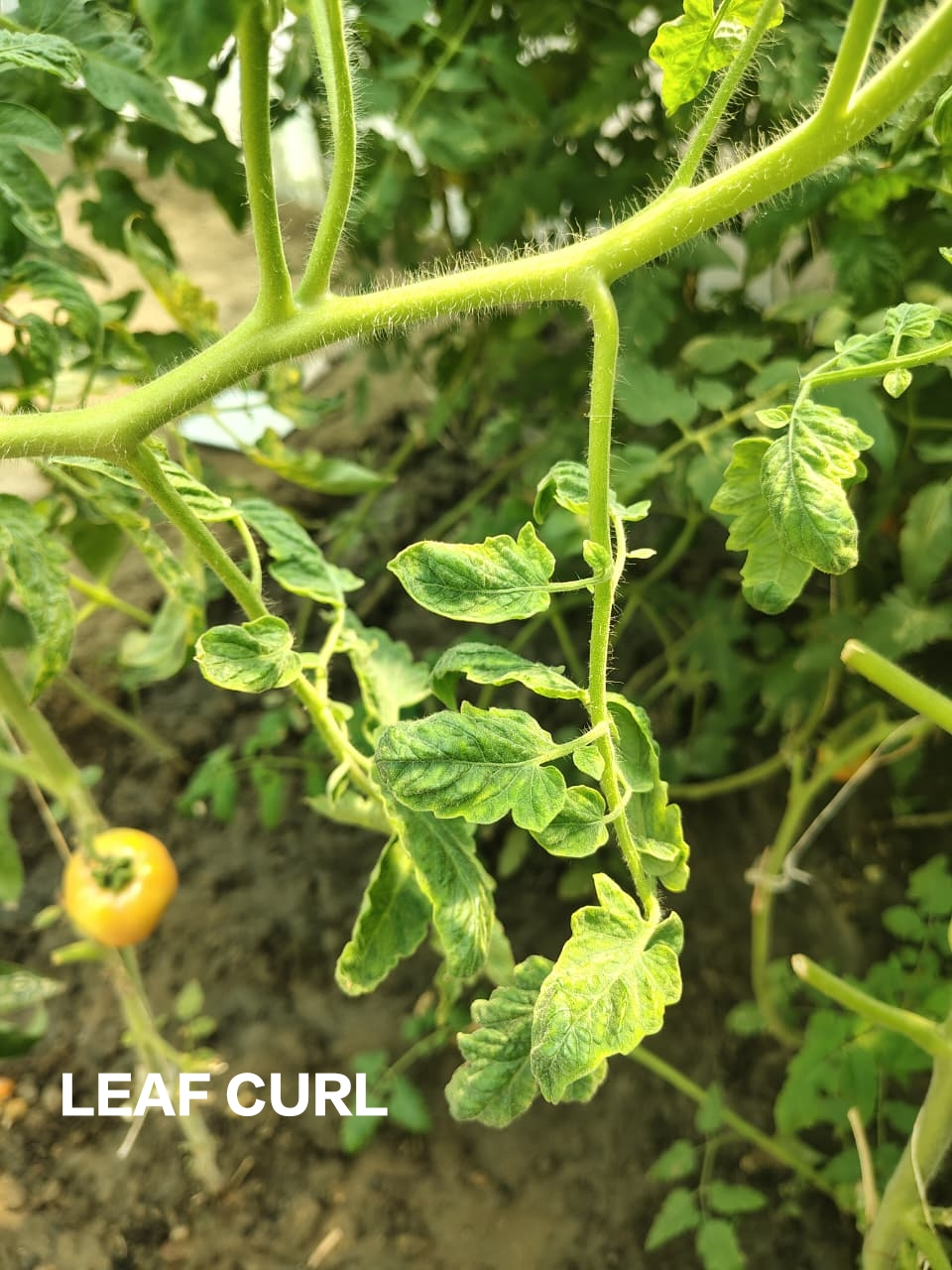
TYLCV is transmitted by the whitefly (Bemisia tabaci) and is one of the most damaging viral diseases of tomato globally. Infected plants exhibit upward curling of leaves, chlorosis, stunted growth, and reduced flowering and fruit set. The disease severely affects yield, with losses ranging from 20% to as high as 100% in India. Globally, yield reductions of 50–100% are common in heavily infested regions.
Cucumber Mosaic Virus (CMV)
CMV is transmitted by aphids and induces mosaic patterns of light and dark green on leaves, along with leaf distortion and a characteristic “shoestring” appearance where leaflets become narrow and thread-like. Infected plants often show poor fruit set and produce malformed fruits. Yield losses in India are typically 10–40%, while global losses range from 20–50% depending on severity and timing of infection.
Disease management and biocontrol
Sustainable tomato cultivation increasingly relies on biological control rather than blanket chemical sprays. Beneficial microbes — endophytes and rhizosphere bacteria — can suppress pathogens while improving plant vigour, and they target the same root and seedling stages where most yield is lost.
Cultural and sanitary practices
- Use certified, disease-free seed and seedlings
- Rotate tomato with non-solanaceous crops to break soil-borne disease cycles (especially for bacterial wilt and Fusarium)
- Stake and prune to keep canopies open and dry — late blight and early blight both depend on prolonged leaf wetness
- Rogue and destroy virus-symptomatic plants immediately to remove inoculum from the field
- Manage whiteflies, thrips, and aphids with yellow sticky traps and insect-proof nets in nurseries to break TYLCV, TSWV, and CMV transmission
- Mulch to reduce soil splash, which drives early blight onto lower leaves
Biocontrol agents
- Trichoderma spp. — seed and soil treatment to suppress damping-off, early blight, and Fusarium
- Bacillus subtilis and Bacillus velezensis — root-zone colonisers that prime plant defences against soil-borne fungi
- Pseudomonas fluorescens — induces systemic resistance against bacterial wilt and several foliar pathogens
- Beauveria bassiana / Lecanicillium spp. — entomopathogens targeting whitefly, thrips, and aphids to break the virus-transmission cycle
How to identify and treat tomato diseases
Field identification is a sequence, not a guess. Walk the canopy from bottom to top, look at both leaf surfaces, then check the stem base and fruits. Match what you see against the symptom table below before reaching for any spray.
- 1Concentric ring spots on lower leaves → early blight → remove infected lower leaves; apply Trichoderma + Bacillus rotation; improve airflow
- 2Greasy, water-soaked lesions spreading fast under cool wet weather → late blight → destroy infected plants; protect remaining canopy; prune for airflow
- 3White powder on upper leaf surface in dry weather → powdery mildew → sulphur-based or Bacillus-based foliar treatment; reduce canopy density
- 4Sudden wilt without yellowing, milky ooze from cut stem in water → bacterial wilt → rogue and destroy; rotate; never replant tomato in the same bed for 2–3 seasons
- 5Upward leaf curl + stunted growth + whiteflies present → TYLCV → rogue infected plants; install yellow sticky traps and insect-proof nets; introduce Beauveria bassiana
- 6Mosaic and shoestring leaves + aphids present → CMV → rogue infected plants; control aphids; use clean seed
- 7Bronze/purplish leaf spots + ring spots on fruit → TSWV → rogue infected plants; manage thrips; remove weed reservoirs
Quick yield-loss reference
- Early blight: 32–48% in India, 20–79% globally
- Late blight: 20–80% in India, 30–100% globally
- Powdery mildew: 10–30% in India, 20–40% globally
- Bacterial wilt: 30–90% in India, up to 100% globally
- TSWV: 20–60% in India, 30–90% globally
- TYLCV: 20–100% in India, 50–100% globally
- CMV: 10–40% in India, 20–50% globally
Conclusion
Tomato is one of the most economically important vegetable crops in the world, but its yield is uniquely vulnerable to a stack of soil-borne, foliar, vascular, and vector-borne diseases. Visual identification gets you to the right diagnosis fast; clean seed, vector management, canopy hygiene, rotation, and microbial biocontrol keep the crop in the ground long enough to harvest it. Build the season around prevention — not rescue sprays — and the 30–80% yield-loss baseline stops being inevitable.
Written by
Smita Kumari
Research Assistant
Research Assistant at exRNA Agro, focused on tomato (Solanum lycopersicum) crop health, disease diagnostics, and biocontrol-led pest and disease management.